

Why “Hidden” Inflammation Matters
Many people with chronic fatigue, weight gain, joint pain, brain fog, hormone imbalance, or rising disease risk are told their labs are “normal.”
Yet inflammation can be quiet, early, and invisible—long before disease is diagnosed.
Functional medicine looks deeper, using specific laboratory markers that reflect how the immune system, metabolism, and tissues are responding beneath the surface.
Below are five of the most clinically useful markers we use to uncover chronic, low-grade inflammation.
1️⃣ High-Sensitivity C-Reactive Protein (hs-CRP)
What it measures
hs-CRP is a protein produced by the liver in response to inflammatory signals, particularly IL-6.
How we interpret it
- Optimal: < 1.0 mg/L
- Moderate risk: 1.0–3.0 mg/L
- High risk: > 3.0 mg/L
Unlike standard CRP (used for infections), hs-CRP detects subtle, ongoing inflammation associated with cardiovascular disease, metabolic dysfunction, and cancer risk.
Why it matters
Elevated hs-CRP predicts:
- Heart attack and stroke risk
- Progression of insulin resistance
- Worse outcomes in autoimmune and neurodegenerative disease
Even mild elevations often reflect dietary inflammation, visceral fat activity, poor sleep, or chronic stress.
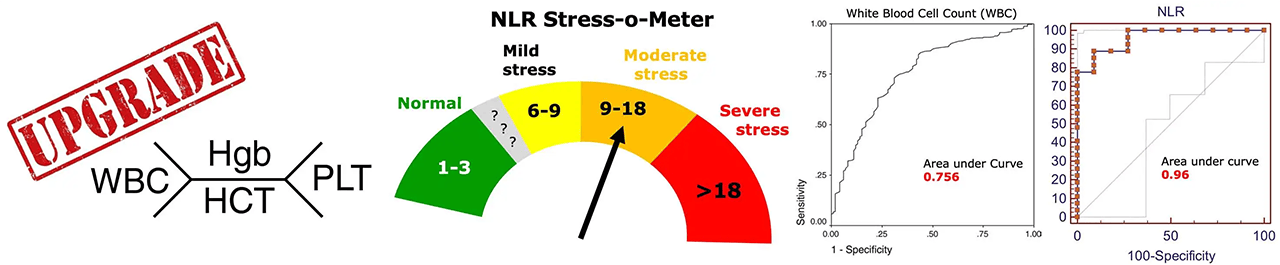
2️⃣ Neutrophil-to-Lymphocyte Ratio (NLR)
What it measures
NLR is calculated from a standard CBC by dividing neutrophils by lymphocytes.
It reflects the balance between innate (immediate) and adaptive (regulatory) immune activity.
How we interpret it
- Optimal: ~1.0–2.0
- Elevated: > 2.5–3.0
- High inflammatory burden: > 4.0
Why it matters
An elevated NLR is associated with:
- Cardiovascular disease risk
- Cancer progression
- Autoimmune disease activity
- Chronic stress and cortisol dysregulation
It’s one of the simplest and most powerful inflammation markers, often overlooked in conventional care.
3️⃣ Ferritin (When Interpreted Correctly)
What it measures
Ferritin reflects iron storage, but it is also an acute-phase reactant, meaning it rises with inflammation.
How we interpret it
- Low ferritin: iron deficiency
- High ferritin + normal iron: inflammation, metabolic dysfunction, liver stress
In inflammatory states, ferritin may rise even when iron stores are adequate or low.
Why it matters
Elevated ferritin is linked to:
- Insulin resistance
- Fatty liver disease
- Cardiovascular risk
- Chronic inflammatory and autoimmune conditions
Ferritin should always be interpreted in context with iron saturation, CRP, liver enzymes, and metabolic markers.
4️⃣ Fasting Insulin (Not Just Blood Sugar)
What it measures
Fasting insulin reflects how hard the pancreas must work to keep blood sugar normal.
How we interpret it
- Optimal: < 8–10 μIU/mL
- Early inflammation/metabolic stress: > 10
- Significant insulin resistance: > 15–20
Many patients have normal glucose and A1c while insulin is already elevated.
Why it matters
Insulin is a pro-inflammatory hormone when chronically elevated.
High fasting insulin promotes:
- Fat storage
- Endothelial inflammation
- Hormone imbalance
- Increased cancer and cardiovascular risk
It is one of the earliest warning signs of metabolic inflammation.
5️⃣ Gamma-Glutamyl Transferase (GGT)
What it measures
GGT is a liver enzyme involved in glutathione metabolism and oxidative stress defense.
How we interpret it
Even values within the “normal” lab range may be concerning if:
- GGT is rising over time
- GGT is high relative to other liver enzymes
Why it matters
Elevated GGT is associated with:
- Oxidative stress
- Environmental toxin exposure
- Alcohol-related inflammation
- Cardiovascular and metabolic disease risk
It often reflects inflammatory overload before overt liver disease appears.
Putting the Pattern Together
No single lab tells the whole story.
Inflammation reveals itself through patterns—across immune markers, metabolic markers, liver enzymes, and clinical symptoms.
When we see:
- Elevated hs-CRP
- Rising NLR
- High ferritin without iron overload
- Elevated fasting insulin
- Increased GGT
We’re often looking at modifiable, lifestyle-driven inflammation—not irreversible disease.
A Functional Medicine Perspective
These markers allow us to:
- Identify inflammation years before diagnosis
- Track response to lifestyle and nutrition changes
- Personalize dietary, movement, sleep, and stress interventions
- Reduce risk across multiple chronic diseases simultaneously
Key Takeaway
Inflammation leaves fingerprints in your labs—long before symptoms demand attention. When we look early and intervene upstream, we create the opportunity for true prevention and healing.


